Should you be taking CoQ10 / Ubiquinol to fall pregnant?
When we talk about fertility, most women immediately think of hormones, ovulation, and cycle timing. But behind the scenes, there’s another important piece of the puzzle that often gets missed… egg quality.
And one nutrient that plays a huge role in egg quality is Coenzyme Q10 (CoQ10).
What is CoQ10?
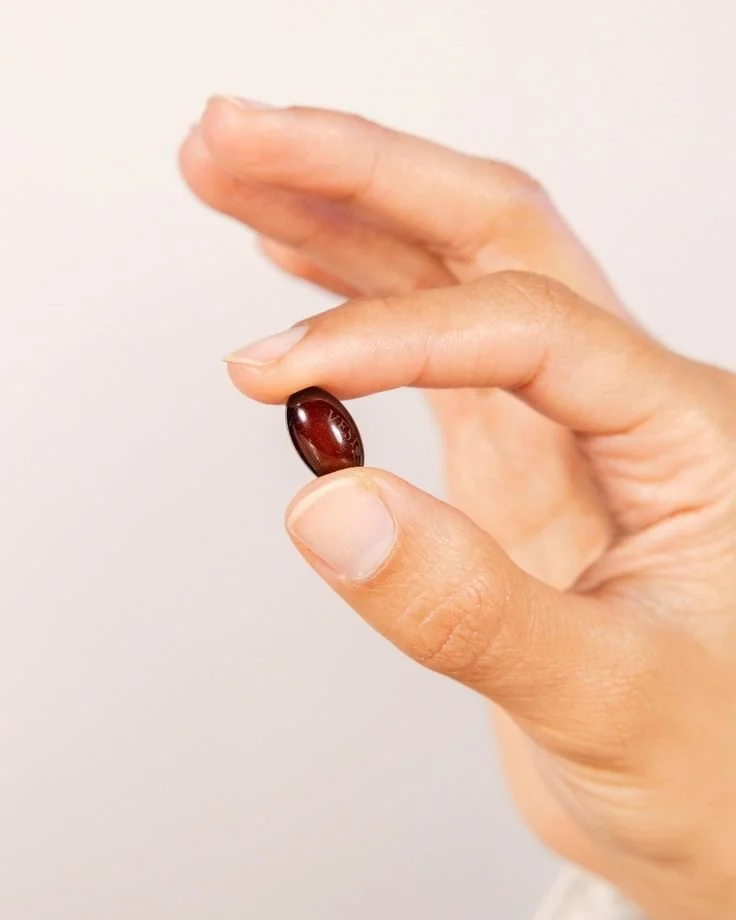
CoQ10 is a naturally occurring compound found in every cell of the body.
Its main role is to help our cells produce energy inside the mitochondria (the powerhouse of the cell).
Think of CoQ10 as a “spark plug” for your cells - without enough of it, energy production becomes less efficient, and cells don’t function at their best.
The thing is, as we age, our mitochondria become damaged and less efficient energy producers – this can become an issue for fertility as our egg quality is heavily dependent on energy production. In fact, a developing egg has more than 15,000 mitochondria!
In simple terms:
Better mitochondrial health = better egg performance.
How does CoQ10 affect my chances of falling pregnant?
The egg relies on energy production to develop properly and with the correct number of chromosomes. It’s when energy is low that this process fails, leading to chromosomal abnormalities and/or the inability for the egg to survive the first week and implant successfully.
A higher level of CoQ10 is associated with higher-quality eggs and a higher pregnancy rate.
Don’t forget about the antioxidant properties...
CoQ10 is also a strong antioxidant, which helps to protect your egg (and sperm) cells from damage (which is caused by oxidative stress).
Oxidative stress naturally increases with age, and can be influenced by stress, inflammation, diet and environmental exposures. By taking a regular high-quality CoQ10 supplement, you can increase your chances of conceiving by supporting healthier eggs and improving DNA production.
Who should take CoQ10?
CoQ10 is particularly helpful for:
Women over 30
Those with a history of poor egg quality or low ovarian reserve
Recurrent implantation failure or early miscarriage
Preparing for natural conception or IVF
Anyone wanting to optimise fertility at a cellular level
The dosage will vary depending on your circumstances, and the quality of this supplement matters. For example, taking ubiquinol is the most active form, which means the body can absorb it better than standard CoQ10 supplements.
If you’re trying to conceive or planning soon, and want a personalised supplement and diet plan to improve your fertility, I’d love to support you.